
Products
Dicalcium phosphate (DCP) for animal feed
Dicalcium phosphate (DCP) supplies calcium and phosphorus for bones, eggshell, growth, fertility and milk production.
Our dicalcium phosphate (dcp)
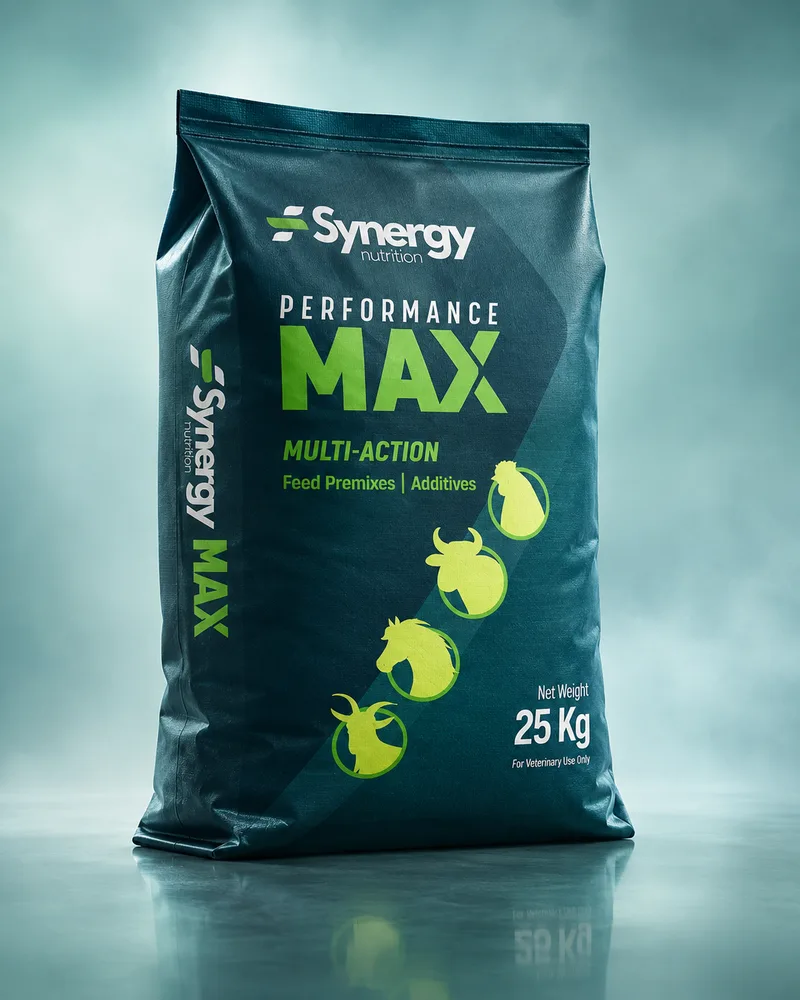
What is dicalcium phosphate?
Dicalcium phosphate (DCP) is one of the most widely used mineral ingredients in animal feed. It supplies phosphorus and calcium, two minerals that animals need in large amounts.
Why phosphorus and calcium matter
Phosphorus and calcium are essential for bone development, eggshell formation in layers, growth in broilers, and milk production and fertility in dairy cows. Plant-based ingredients contain phosphorus that animals cannot fully use, so an available source such as DCP is usually added.
The calcium-to-phosphorus balance of the whole ration matters, not just the amount of each.
DCP MAX
DCP MAX is inorganic, rock-sourced dicalcium phosphate with calcium 28–30%, phosphorus 9–12% and moisture below 2%, with zero synthetic phosphorus or phosphoric acid. It is packed in 25 kg multiwall laminated paper bags.
Dosage: 75–100 g per day for cows and buffaloes, 40–50 g for dry animals, 15–20 g for calves and goats, and 20–30 kg per ton of feed (2–3%) for layers.
DCP from Synergy Nutrition
Synergy Nutrition is a feed premix and functional additive manufacturer in Lahore, Pakistan, established in 1997. We work business-to-business with feed mills, animal health companies and veterinary professionals.
General information. Follow the product label and the advice of your veterinarian or nutritionist.
FAQ
Dicalcium phosphate (DCP): common questions
What does DCP stand for?
DCP stands for dicalcium phosphate, a feed ingredient that supplies phosphorus and calcium.
What are the specifications of DCP MAX?
Calcium 28–30%, phosphorus 9–12%, moisture less than 2%, zero synthetic phosphorus or phosphoric acid, rock sourced, in a 25 kg multiwall laminated paper bag.
How much DCP should layers get?
For DCP MAX, 20–30 kg per ton of feed, which is 2–3% of the ration.
Which animals is DCP MAX for?
DCP MAX is targeted at poultry, ruminants, equines and aquaculture.
Contact
Talk to our team
Tell us about your animals, your formulation and the challenge you are working on. We work with feed mills, animal health companies and veterinary professionals.